
If you’re considering HIFU (High-Intensity Focused Ultrasound) as your solution for skin tightening and facial rejuvenation, you might wonder if it’s a “one-time” treatment. After all, the idea of a single, non-invasive treatment to address sagging skin or wrinkles is certainly appealing.
However, HIFU is not a one-time treatment, and setting realistic expectations is crucial for achieving optimal results. In this guide, we’ll explain why HIFU requires multiple sessions, how it works, what you can expect, and why patience and consistency are key to getting the most from your HIFU treatment.
What is HIFU?
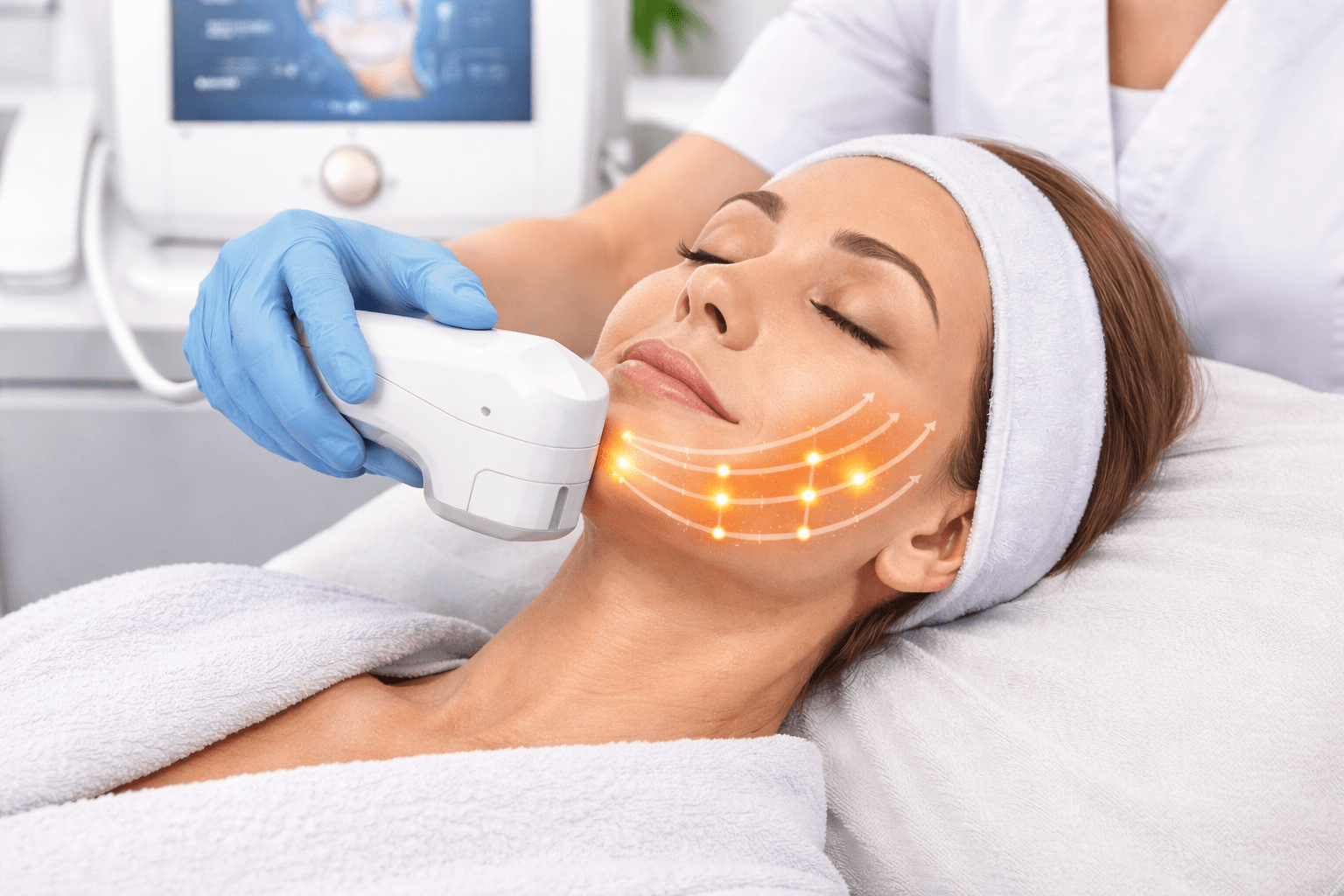
HIFU (High-Intensity Focused Ultrasound) is a non-invasive skin tightening treatment that uses focused ultrasound energy to stimulate collagen production in the deeper layers of the skin. Unlike traditional facelifts, which require surgery and recovery time, HIFU offers a non-surgical, no-downtime solution to achieve a firmer, more youthful appearance.
How Does HIFU Work?
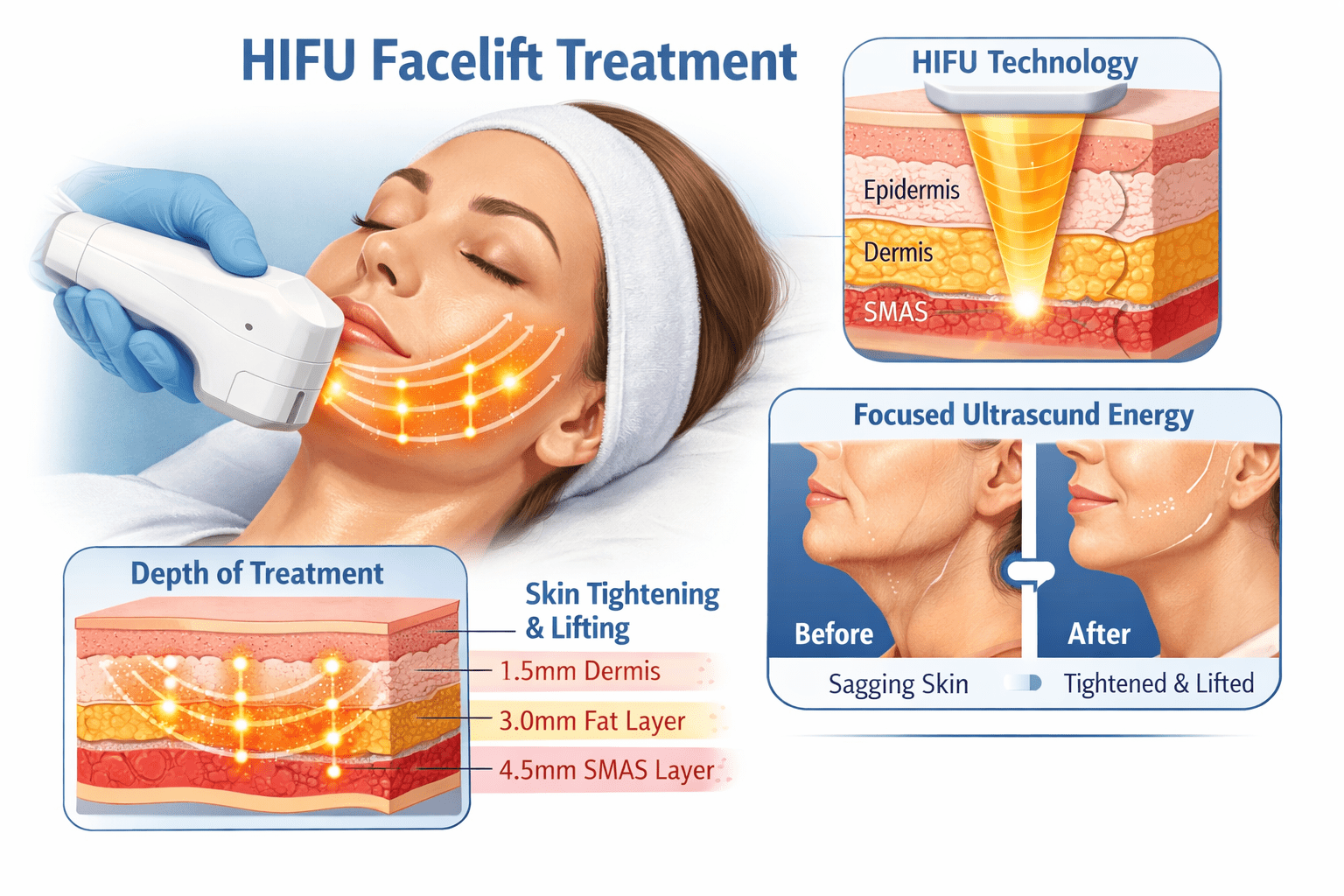
HIFU works by delivering ultrasound energy to the SMAS layer of the skin (Superficial Muscular Aponeurotic System), which is the same layer targeted during a traditional facelift. This energy stimulates the production of collagen and elastin, essential proteins that help keep the skin firm, smooth, and youthful-looking.
The skin tightening effect from HIFU is gradual. Over the course of several weeks to months, collagen regenerates, leading to smoother, firmer, and more youthful skin.
Why HIFU Is Not a “One-Time” Treatment
1. Collagen Production Takes Time
One of the key reasons HIFU is not a one-time treatment is that collagen production is a slow process. After the treatment, the ultrasound energy begins to stimulate collagen and elastin production, but it takes time for these proteins to accumulate and show visible results.
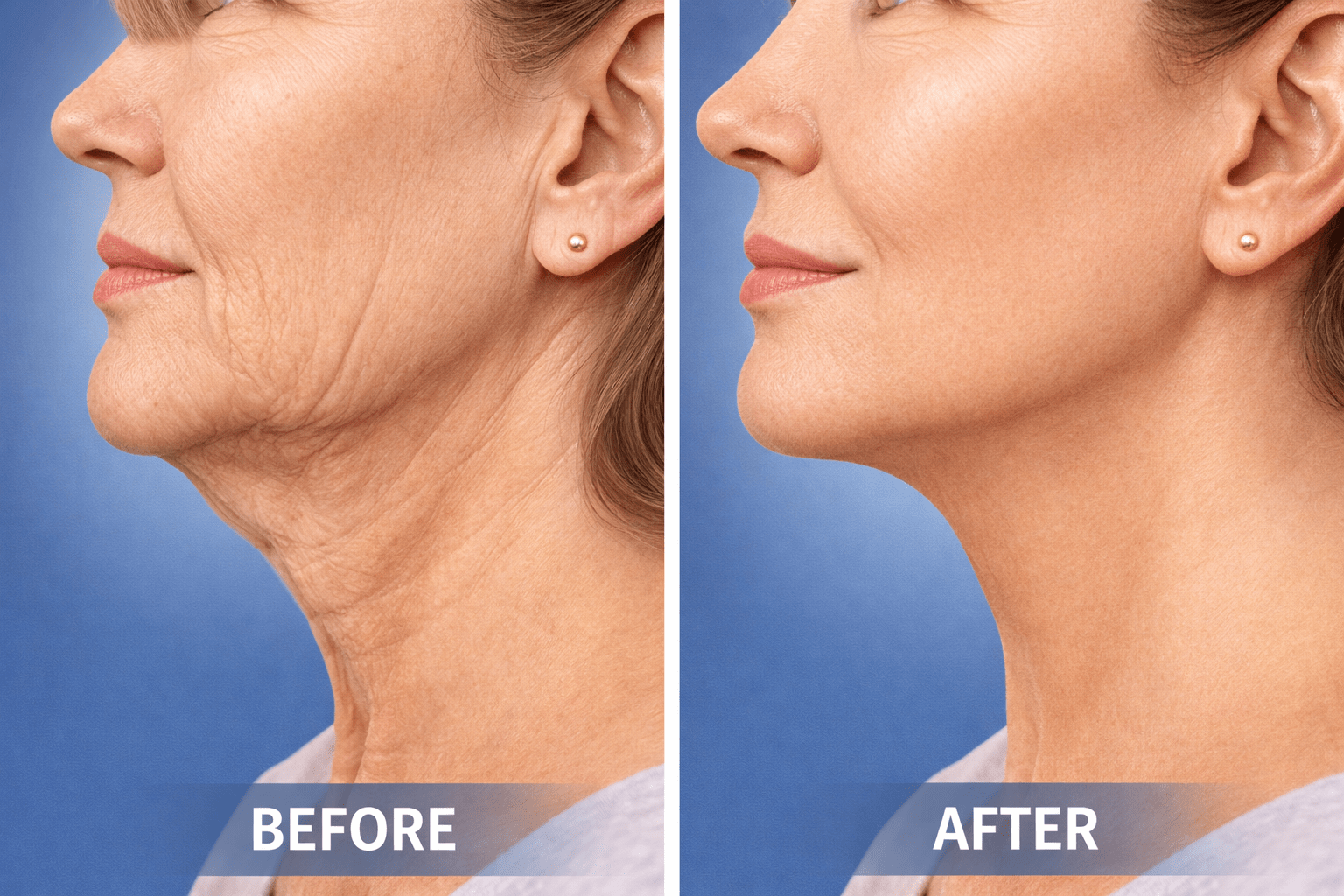
While you may notice some immediate tightening, full results typically appear after 2 to 3 months, as collagen builds and the skin gradually tightens.
2. The Body Needs Ongoing Stimulation for Lasting Results
While HIFU can provide long-lasting results, maintaining the effects requires periodic touch-up treatments. As you age, collagen production naturally declines, so regular HIFU sessions help maintain and enhance the initial results.
How often should you get HIFU treatments?
For most patients, one to two sessions per year are sufficient to maintain the results of HIFU treatment. However, the number of sessions may vary depending on individual skin needs, lifestyle, and age.
3. Each Session Targets Different Layers of Skin
HIFU works by targeting different layers of skin to stimulate collagen and tighten the skin. The first session may treat the surface layers, but as the skin’s collagen improves, additional sessions can target deeper layers for more dramatic results.
Each session builds upon the previous one to progressively enhance the skin’s tightness and firmness.
What Can You Expect from HIFU Treatment?
1. Immediate Results
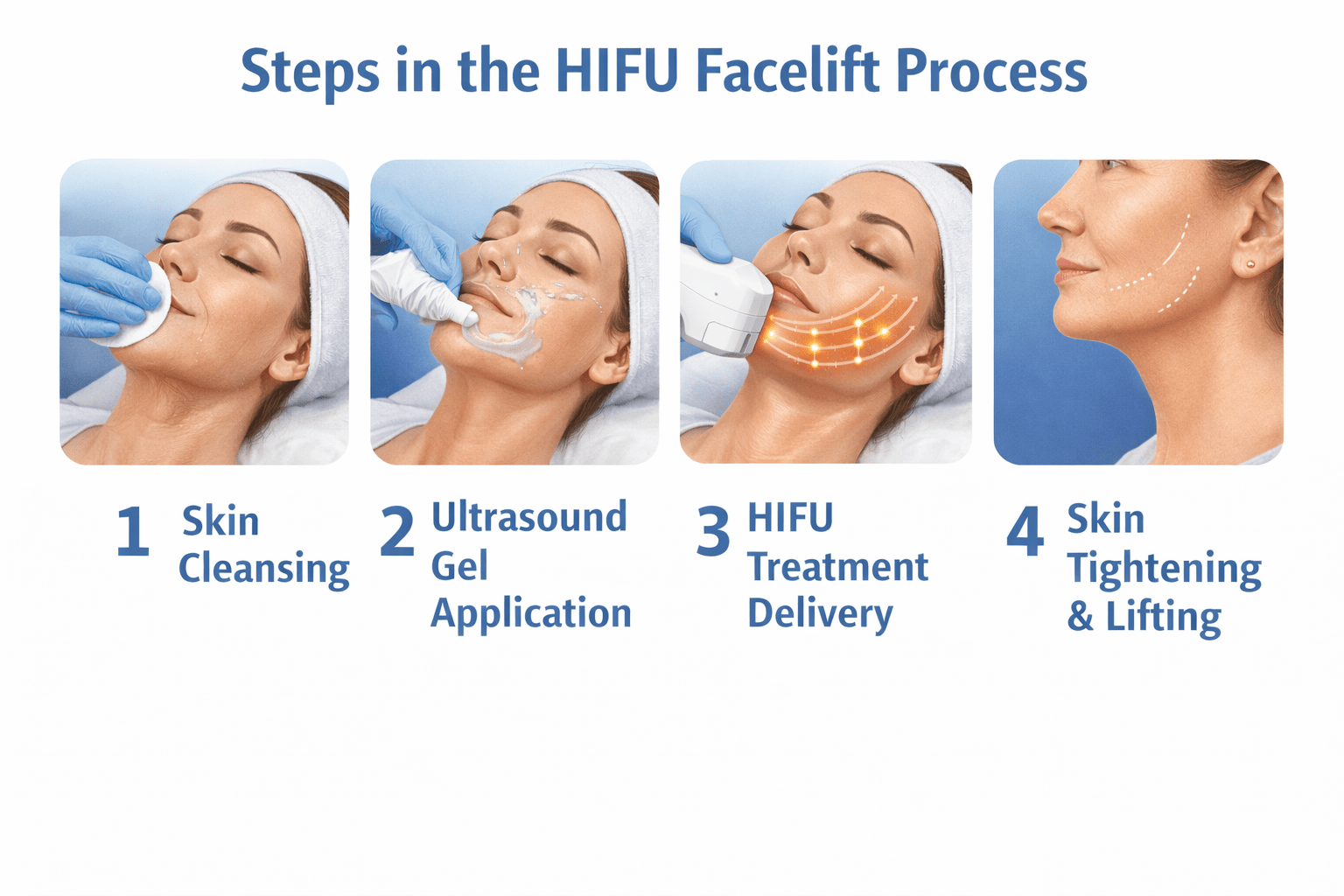
Although HIFU is not a one-time treatment, many patients experience immediate results after the first session, such as slight tightening or smoother skin. This is due to the instant tissue contraction caused by the ultrasound energy.
2. Gradual Improvement
The real benefits of HIFU appear over time. As collagen production increases, the skin becomes firmer and more youthful-looking. Over the course of 2–3 months, the full effects of HIFU become visible.
3. Long-Term Results
The results of HIFU typically last between 12 to 24 months. However, it’s important to understand that as skin ages naturally, maintenance treatments are necessary to keep the skin tight and youthful.
HIFU Treatment Timeline: What You Should Know
| Stage | Expected Results | Timeline |
|---|---|---|
| Immediate Results | Mild tightening, temporary firming | Immediately |
| Visible Improvement | Gradual skin tightening as collagen increases | 2-3 months |
| Full Results | Maximum lifting, firming, and rejuvenation | 6 months |
| Maintenance | Long-lasting results, periodic touch-ups | 12-24 months |
How Many Sessions of HIFU Do You Need?
Most individuals require one session to see noticeable improvements in their skin’s tightness and texture. However, for more significant results, particularly for deeper lines or more pronounced sagging, 2–3 sessions may be recommended.
Why Multiple Sessions Are Important
Builds Collagen Over Time: Multiple sessions allow for progressive tightening as collagen production naturally builds.
Targets Deeper Layers: Each session can target different layers of skin for enhanced results.
Maintains Results: Touch-up sessions ensure that collagen regeneration continues, keeping your skin tight and youthful.
What to Expect After HIFU Treatment?
1. No Downtime
Unlike traditional facelifts, HIFU is a non-invasive treatment that requires no downtime. You can return to your normal activities immediately after treatment.
2. Possible Side Effects
Most patients experience mild redness or swelling in the treated areas, which typically subsides within a few hours.
3. Post-Treatment Care
While no special aftercare is required, it is recommended to:
Avoid excessive sun exposure
Apply sunscreen regularly
Follow any specific post-care instructions provided by your practitioner
Realistic Expectations: Understanding the Limits of HIFU
HIFU is an excellent non-surgical option for skin tightening and rejuvenation, but it’s important to have realistic expectations.
While HIFU can significantly improve skin firmness and reduce signs of aging, it’s not a replacement for a surgical facelift. For those with severe skin laxity or deep wrinkles, surgery may still be the most effective solution.
Why Choose HIFU at Our Clinic?
At HIFU Facelift Clinic, we specialize in non-invasive skin rejuvenation and tightening treatments. Our experienced professionals use the latest HIFU technology to help you achieve your beauty goals without surgery or downtime.
Experienced practitioners
FDA-approved devices
Customized treatment plans tailored to your needs
Safe and non-invasive treatment
Conclusion: HIFU and Realistic Expectations
HIFU is a powerful, non-surgical option for skin tightening, but it requires multiple sessions to achieve long-lasting, optimal results. While a one-time treatment may offer some immediate benefits, continued sessions will help you maintain results and ensure your skin stays youthful and firm over time.
If you’re ready to tighten your skin and achieve a youthful, natural look, HIFU might be the solution for you.