
Who Is HIFU Best For?
HIFU is often recommended for people with mild to moderate skin laxity—especially early signs of ageing—rather than very advanced sagging.
You may be a good candidate if you want to improve:
Soft jawline / early jowls
Cheek drooping or mid-face heaviness
Loose neck skin
Fine lines and crepey texture
Overall skin firmness and definition
HIFU can be a great option if you want results that look natural—not “overdone”—because improvements develop gradually.
Areas Commonly Treated With HIFU
Depending on your goals and clinical assessment, HIFU is commonly used on:
Forehead and brow area (for a fresher, lifted look)
Cheeks and mid-face
Jawline and jowls
Chin area (definition)
Neck
Décolletage (chest area)
Your practitioner should recommend a personalised plan based on your facial structure and skin laxity.

What Happens During a HIFU Appointment?
A typical HIFU facial appointment often includes:
Consultation & assessment
You’ll discuss goals (jawline? neck? cheeks?) and suitability.Skin cleansing + ultrasound gel
The area is cleaned and gel is applied to help the device glide.Treatment delivery
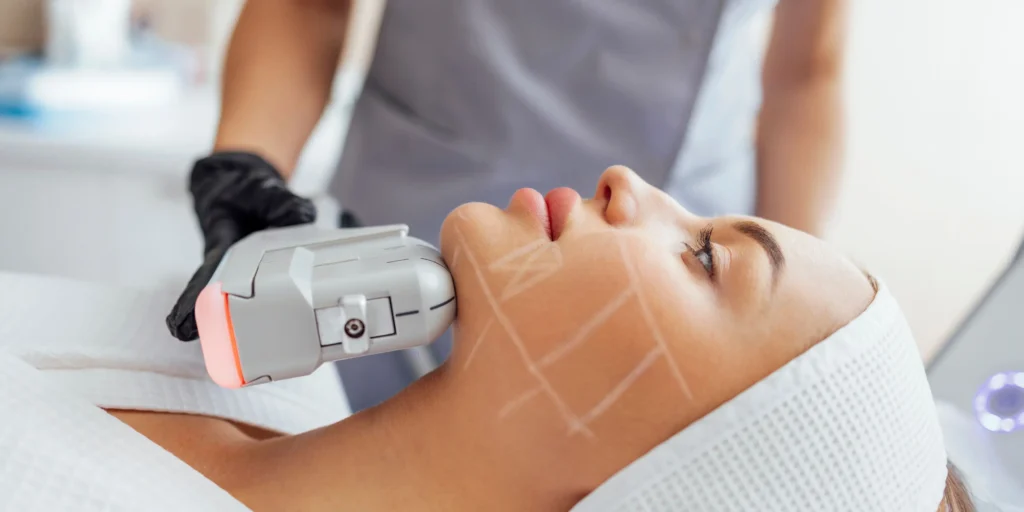
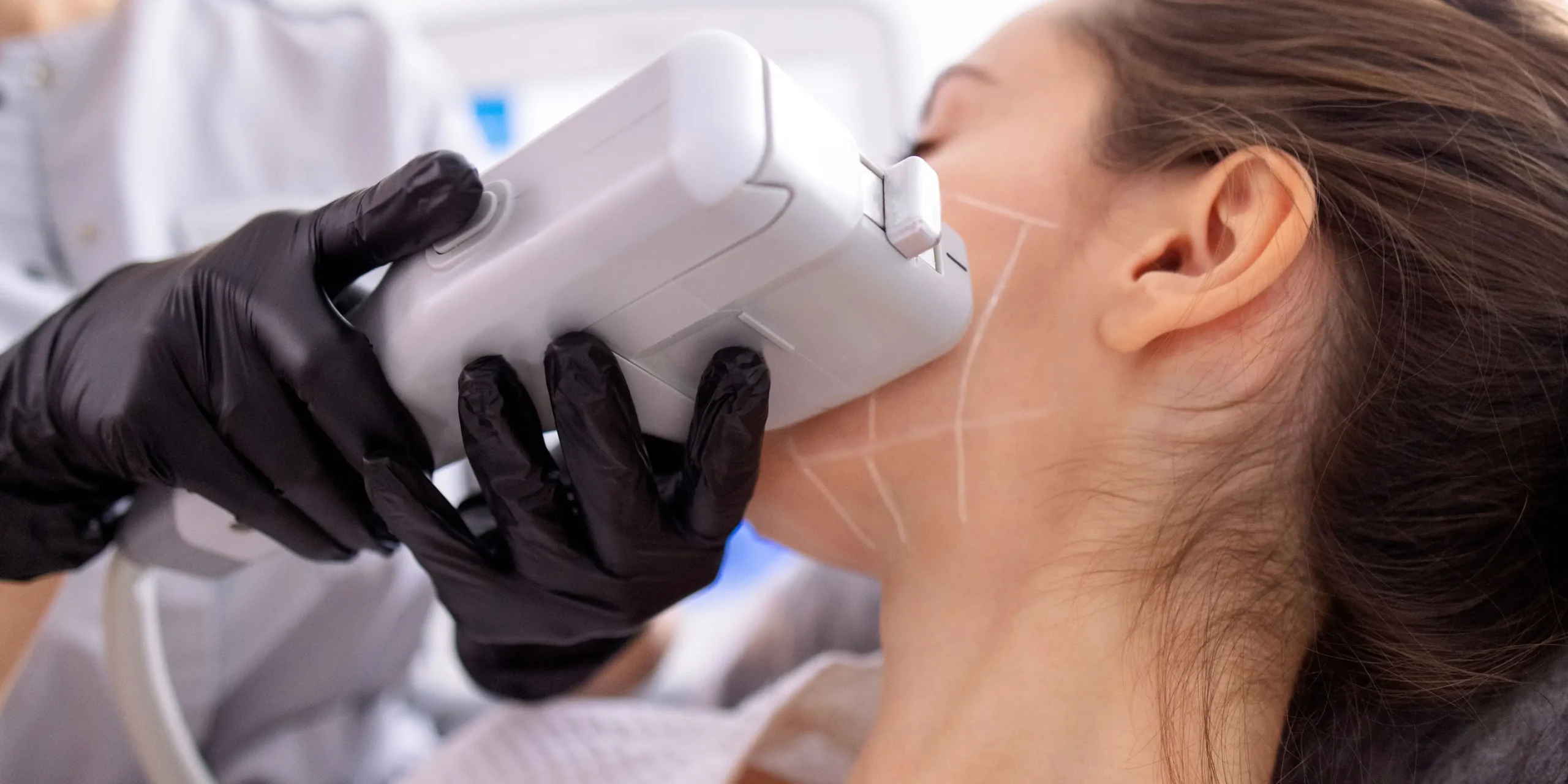
A handheld device delivers ultrasound in controlled pulses.Treatment time
Most sessions are around 30 to 90 minutes, depending on the treated areas.
Some people feel mild discomfort during treatment, and some feel tender afterward. Providers may use methods to improve comfort (for example, topical numbing if appropriate).
What Happens During a HIFU Appointment?
A typical HIFU facial appointment often includes:
Consultation & assessment
You’ll discuss goals (jawline? neck? cheeks?) and suitability.Skin cleansing + ultrasound gel
The area is cleaned and gel is applied to help the device glide.Treatment delivery
A handheld device delivers ultrasound in controlled pulses. Treatment time
Most sessions are around 30 to 90 minutes, depending on the treated areas.
Some people feel mild discomfort during treatment, and some feel tender afterward. Providers may use methods to improve comfort (for example, topical numbing if appropriate).
Downtime and Side Effects: What’s Normal?
One reason HIFU is popular is that many people return to normal routines quickly. medicalnewstoday.com
However, like any energy-based treatment, side effects can happen. Possible temporary effects may include:
Redness or warmth
Mild swelling
Tenderness or sensitivity
Temporary numbness
Bruising in some cases
Your provider should explain what’s normal and what’s not—and what aftercare is best for your skin.
When Will You See Results After HIFU?
HIFU results are usually not instant like fillers. Some people notice a subtle tightening early, but the best improvements often appear as collagen rebuilds.
A commonly cited timeline is 2–3 months for ultrasound skin tightening improvements, with maintenance influenced by skincare and lifestyle.
Clinical studies evaluating HIFU for wrinkles and laxity have shown visible improvements in areas like the jawline and cheeks, with side effects typically described as mild and transient.
What this means for you:
If you want a change that looks natural and gradual, HIFU is often a strong choice.
HIFU vs Other Skin Tightening Options
Choosing the right treatment depends on your skin, goals, and timeline. Here’s a simple comparison:
HIFU
Best for: lifting + tightening at deeper layers; jawline/cheeks/neck definition.
Results: gradual, collagen-based.
Radiofrequency (RF)
Best for: surface-level tightening, texture, mild laxity.
Often feels warmer; can be great for maintenance.
Microneedling
Best for: texture, pores, acne scarring, fine lines (especially paired with actives).
Not primarily a “lifting” tool.
Surgical facelift
Best for: significant laxity and dramatic repositioning.
More downtime and higher cost; longer-lasting but invasive.
If you’re not sure what you need, your consultation should clarify whether you’re a better fit for HIFU or a different approach.
How to Make Your HIFU Results Last Longer
While outcomes vary from person to person, these habits often help support skin quality:
Daily broad-spectrum SPF
Consistent skincare routine (hydration + barrier support)
Avoid smoking (collagen breakdown)
Adequate protein + hydration
Follow your clinician’s aftercare advice